Phase 24 · KIOS benchmark reanalysis
What the average hides.
The average rose. Occlusion and mixed stress got worse.
Reanalysis only. Charts from published Phase 23 aggregates. No model was retrained; no new predictions were made.
LoadingSix-condition mAP50 change
LoadingSix-condition recall change
LoadingConditions with higher Phase 23 mAP50
LoadingSevere-condition mAP50 change
Four gained, two regressed. Occlusion lost 21.0 points; mixed stress lost 5.5.
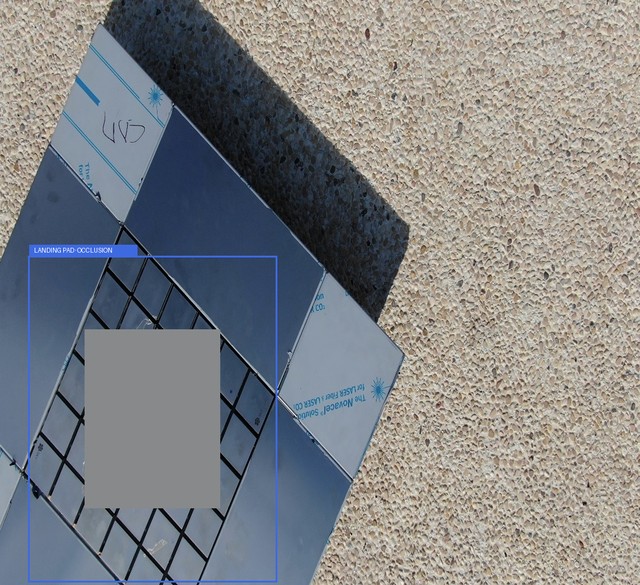 KIOS occlusion frame. Visual context; chart values come from the published aggregates.
Condition by condition
The same 86 test frames are reused across conditions.
mAP50 change vs baseline
Percentage-point difference; the zero line marks no change
Swipe sideways to read every condition →
GainRegression
mAP50 by camera condition
Detection quality at IoU 0.50
Swipe sideways to read every condition →
Detector baseline (320px)Phase 23 robust
Recall by camera condition
Share of labeled targets detected
Swipe sideways to read every condition →
Detector baseline (320px)Phase 23 robust
Recall change vs baseline
Percentage-point difference; the zero line marks no change
Swipe sideways to read every condition →
GainRegression
The full frontier
Source values. Deltas are percentage points (pp).
Swipe sideways for every metric →
| Condition | Baseline mAP50 | Phase 23 mAP50 | mAP50 Δ | Baseline recall | Phase 23 recall | Recall Δ |
|---|
| Loading condition metrics… |
Severe-stress readout: Loading…
The source files call the 320px comparator “Phase 22 Baseline.” That KIOS detector is separate from the frozen Phase 22 simulation transfer model.
How to read this
Published detector metrics, reanalyzed.
Macro method
Each of the six conditions counts equally. The severe view averages occlusion and mixed stress.
One temporal holdout
The same 86 protected frames appear in all six conditions. They are not 516 independent examples.
 AEGISLANDMODEL VASE