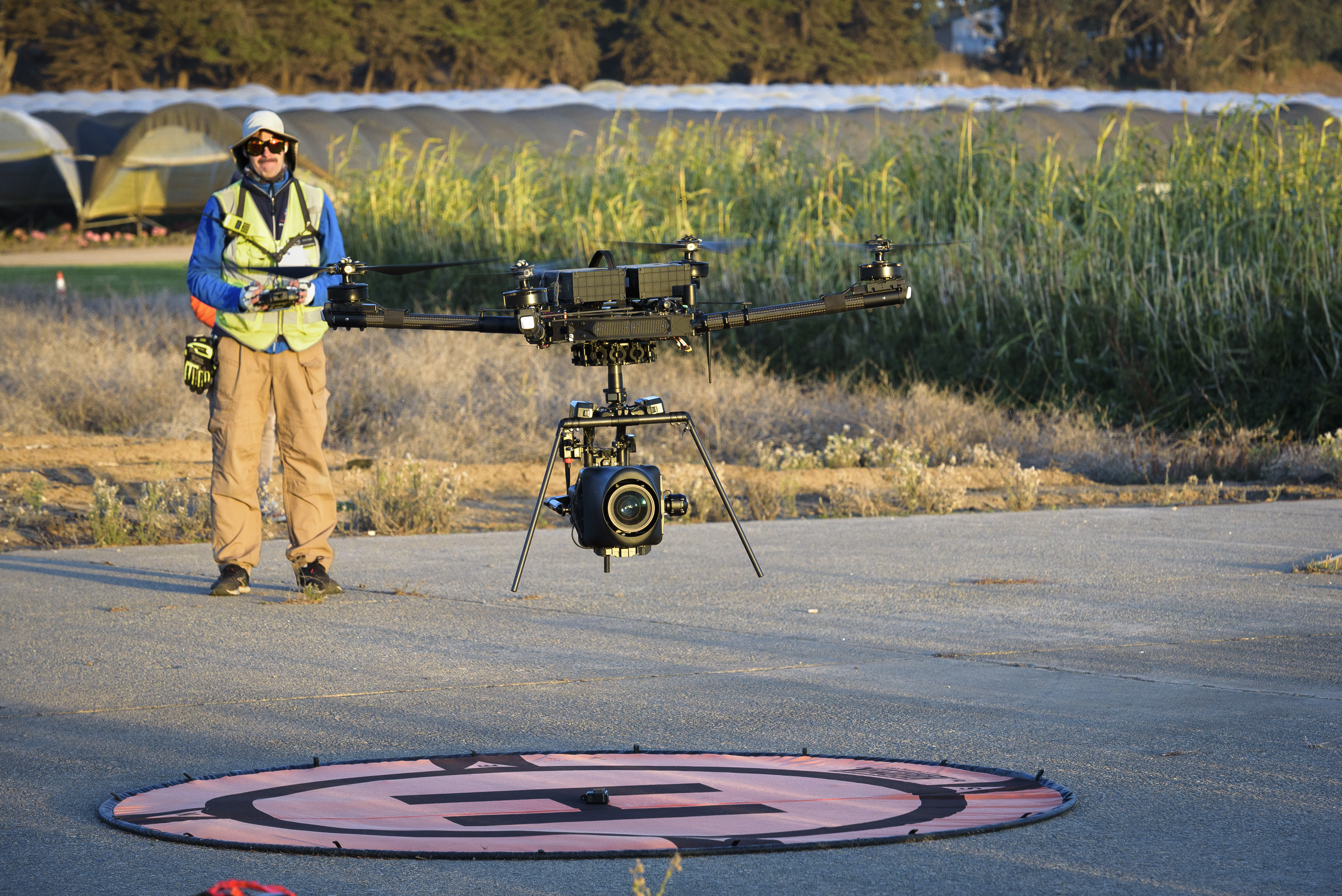
Baseline
Loading resultsLoading source image…
- Matched
- —
- Unmatched
- —
- Missed
- —
 AEGISLANDMODEL VASE
Aerial landing research, with the failures left in. Compare original detector predictions, explore camera stress, and see what the separate simulation actually established.
Original-model replay verified. Retrospective evidence, not flight certification.
Loading source image…
Loading source image…
Loading the saved original-model record…
Illustrative reused KIOS frame, not a representative sample. Metrics count every prediction; overlays show all matched boxes and up to two unmatched boxes. Target matching permits false positives and does not mean landing success.
Original replay, exact match. 24 / 24 published metric cells matched exactly; four prediction tables matched byte-for-byte.
Check the receipt →Phase 23 improves mAP50 in four of six camera conditions. Occlusion and mixed stress expose regressions that the average hides.
−13.3 pp mAP50 on the equally weighted occlusion + mixed-stress pair · Phase 24 reanalysis
Baseline measured · Phase 23 paired
Read the paired detector study →Published condition-level mAP50, not the selected-frame match above. Same 86 reused frames from two dependent sequences.
Chart unavailable. Read the original condition table.
Can the system know when its landing estimate is unreliable? Model VASE · answer so far: a simulation found a recovery signal. The camera results remain separate.
These are different experiments. They have not been joined into one tested model.
How Model VASE fits together →V3 landing success under mixed stress.
Frozen simulation, not a camera-to-control result.
10 / 10 gates passed on the final synthetic 32-cell holdout.
Independent data: no dataset admitted. Phase 26 remains a separate prospective gate. The original raw-source occlusion sweep remains INCONCLUSIVE after a failed clean gate; the later Q95 result is a separate saved-artifact replay.
See every phase →Simulation and benchmark results only. No flight-safety claim, certification claim, or controller-tuning claim.
_(ACD24-0180-035).jpg)